Live dealer gaming demands broadcast-quality production infrastructure that operates flawlessly 24/7. As platforms like brilhante bet casino demonstrate, the difference between a mediocre and exceptional player experience hinges on sophisticated audiovisual integration that most casino operators overlook until technical failures damage their reputation.
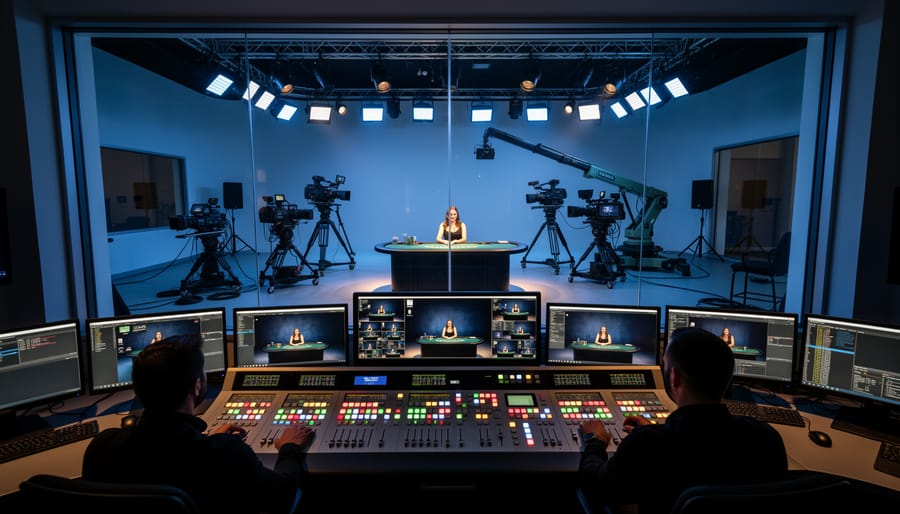
Modern online casino studios require synchronized multi-camera arrays, professional lighting systems, real-time audio mixing, and centralized control interfaces—all working in concert to create immersive gaming environments that retain high-value players. Yet many operators still cobble together consumer-grade equipment and wonder why their broadcasts suffer from inconsistent color temperature, audio latency, or camera switching delays that break player immersion.
The integration challenge extends beyond simply purchasing quality equipment. Your studio needs intelligent systems that allow dealers to focus on gameplay while automated controls manage lighting transitions, camera angles, and audio levels based on game phases. When a single operator manages multiple tables simultaneously, manual AV adjustments become impossible without dedicated broadcast technicians—an unsustainable cost structure.
This guide explores how properly integrated AV infrastructure transforms casino studios from technical liabilities into competitive advantages. You’ll discover specific components that comprise professional casino broadcasting systems, understand how centralized control platforms streamline operations, and learn implementation strategies that minimize downtime during upgrades. Whether building a new studio or modernizing existing facilities, the right integration approach directly impacts both operational efficiency and player satisfaction metrics that determine long-term profitability.
Why Online Casino Studios Need Broadcast-Grade AV Systems
The Player Experience Depends on Technical Excellence
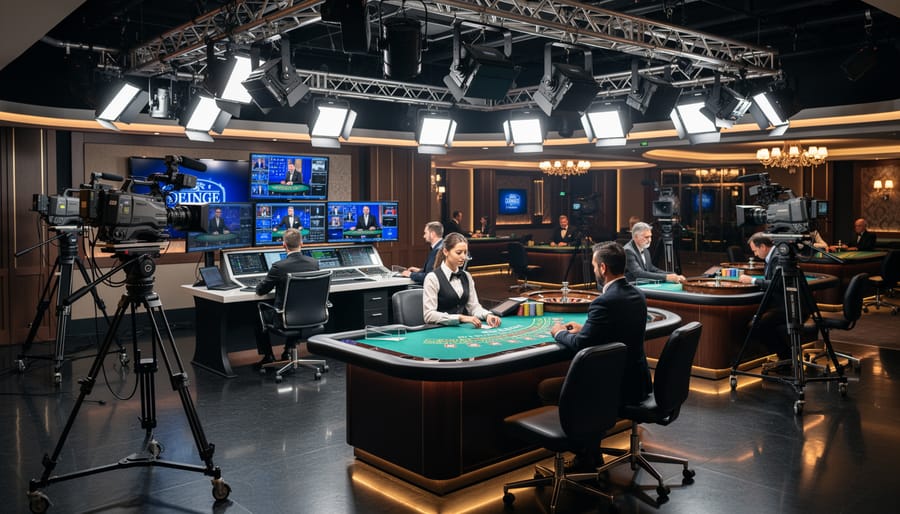
In online casino environments, player experience hinges entirely on technical performance. When video quality drops below 1080p or streams lag, players lose confidence in game fairness and quickly exit to competitors. Research consistently shows that even minor buffering interrupts immersion and directly correlates with decreased session times and lower retention rates.
Audio clarity proves equally critical for maintaining authentic casino atmosphere. Dealers’ announcements, card shuffles, and ambient sounds create the sensory experience that differentiates live gaming from automated alternatives. Poor audio mixing or equipment limitations break this immersion, causing players to question the professional quality of the operation.
Seamless streaming integration ensures these elements work together without technical hiccups. When cameras, microphones, and encoding systems operate as a unified whole rather than disconnected components, the result is smooth gameplay that keeps players engaged. Studios investing in properly integrated AV infrastructure typically see measurable improvements in average session length and player return rates, making technical excellence not just an operational consideration but a direct revenue driver. Modern casino operators recognize that sophisticated broadcast quality isn’t optional—it’s the foundation of competitive advantage.
Regulatory Requirements and Quality Standards
Operating a licensed online casino studio means your AV infrastructure must meet strict regulatory standards set by gaming authorities like the Malta Gaming Authority, UK Gambling Commission, or Gibraltar Regulatory Authority. These bodies require verifiable broadcast quality that ensures game fairness and player protection.
Your system needs comprehensive audit trail capabilities, recording every camera angle, dealer action, and player interaction with tamper-proof timestamps. Gaming regulators typically mandate minimum video resolution standards (often 720p or higher), specific frame rates to capture card movements accurately, and redundant recording systems that preserve footage for extended periods—sometimes up to seven years.
Audio quality standards are equally critical, as regulators require clear communication between dealers and players without interference or delay. Your integration must include synchronized audio-video feeds with latency under 500 milliseconds to maintain game integrity.
Technical specifications often include requirements for backup power systems, failover protocols, and documented maintenance schedules. Many jurisdictions also mandate real-time monitoring capabilities that allow regulatory bodies to access live feeds remotely for inspection purposes. Choosing an integration partner familiar with gaming compliance ensures your studio infrastructure meets these demanding standards from day one, avoiding costly retrofits or operational disruptions during licensing audits.
Core Components of Casino Studio AV Integration
Multi-Camera Video Systems and Switching
Effective multi-camera setups form the backbone of engaging live dealer broadcasts, ensuring every card flip and wheel spin translates clearly to remote players. Professional online casino studios typically deploy 4-8 cameras per table, strategically positioned to capture dealer actions, game surfaces, and result displays from complementary angles.
Pan-tilt-zoom (PTZ) cameras offer particular value in this environment, providing flexible coverage without physical repositioning. These remotely controllable units can smoothly follow gameplay action, zoom in on specific card reveals, or pull back for establishing shots—all managed from a central control interface. This flexibility allows smaller studios to achieve comprehensive coverage without extensive camera infrastructure.
Modern automated switching systems dramatically streamline production workflows while maintaining broadcast quality. These intelligent systems recognize gameplay phases and automatically select appropriate camera angles based on pre-programmed rules. When a dealer reveals cards, the system switches to the close-up view. When results are displayed, it cuts to the overhead shot. This automation reduces operator workload while ensuring consistent, professional coverage that keeps players engaged.
For optimal results, camera placement should account for lighting conditions, player sightlines, and regulatory requirements for verifiable game outcomes. Integrating these video systems with your broader studio control infrastructure creates seamless operational efficiency that scales as your platform grows.
Professional Audio Capture and Processing
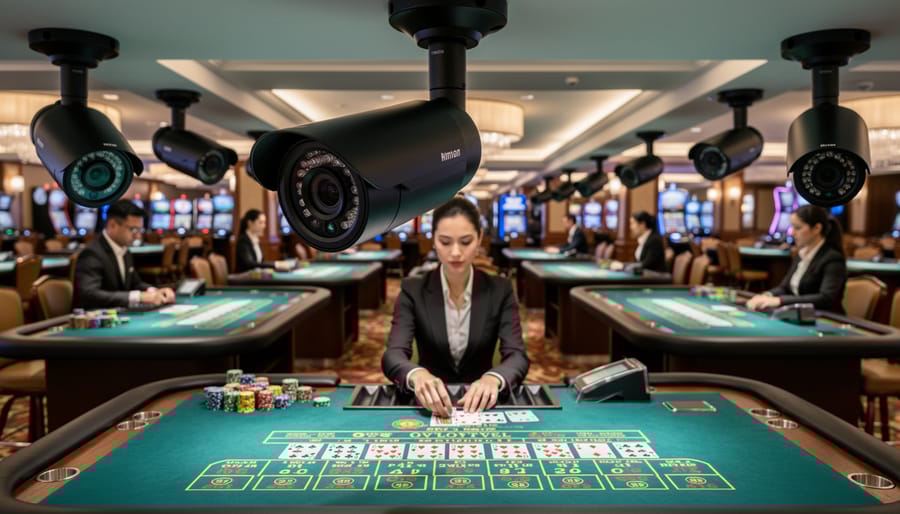
Crystal-clear audio transforms a live dealer game from a simple video stream into an engaging, authentic casino experience. Professional audio capture requires carefully positioned microphone arrays above gaming tables to pick up card shuffles, chip stacking, and dealer announcements without capturing unwanted studio noise. These directional microphones work alongside boundary layer systems that isolate specific sound zones, ensuring players hear every shuffle and spin with remarkable clarity.
Ambient sound management presents unique challenges in casino studios. Background music, ventilation systems, and adjacent table activity must be carefully controlled through acoustic treatment and strategic sound masking. Dealer communication systems enable seamless interaction between studio managers and on-camera staff through discreet earpieces, allowing real-time guidance without disrupting the player experience.
Real-time audio mixing becomes the invisible conductor orchestrating multiple sound sources simultaneously. Advanced mixing consoles automatically adjust levels as dealers speak, suppressing background noise while enhancing vocal clarity. This processing happens instantaneously, with delay measured in milliseconds rather than seconds. When integrated properly, players perceive natural, balanced audio that heightens immersion and trust. The result is an authentic atmosphere that makes remote players feel genuinely present at the table, directly impacting engagement and session duration.
Lighting Design for Optimal Video Quality
Professional lighting design forms the foundation of broadcast-quality casino streams, where precision illumination ensures cards remain readable and dealers appear natural on camera. Controlled lighting environments eliminate reflective glare from polished playing surfaces while maintaining consistent color temperature—typically 5600K daylight-balanced fixtures—that prevents color shifts during extended broadcasts.
Multi-layer lighting systems combine overhead key lights with subtle fill lights positioned to minimize shadows on dealer faces without creating harsh contrasts. Dimmable LED panels offer flicker-free operation synchronized to camera frame rates, eliminating the banding issues that plague traditional fluorescent setups. This consistency matters because online casino streams operate continuously, requiring lighting solutions that maintain uniform quality across all shifts without manual adjustments.
Smart lighting integration allows operators to create scene presets optimized for different game types, adjusting intensity based on card colors or table layouts. Automated systems compensate for ambient light changes, ensuring your broadcast maintains professional standards whether streaming at noon or midnight.

Streaming Infrastructure and Network Integration
Delivering seamless live dealer experiences to global audiences demands robust streaming infrastructure that handles high-definition video without interruption. Modern casino studios require minimum bandwidth of 10-15 Mbps per stream, with encoding technology like H.265 reducing file sizes while maintaining crystal-clear 1080p quality that players expect.
Redundancy is non-negotiable in this environment. Implementing dual-encoder systems and failover protocols ensures continuous operation even during technical issues, protecting revenue and player trust. Your infrastructure should include backup internet connections and power systems that activate instantly during outages.
Content delivery networks (CDNs) distribute streams efficiently across continents, reducing latency to under 500 milliseconds for most regions. This speed maintains the real-time interaction that differentiates live dealer games from standard online casino offerings. Choosing CDN providers with multiple global nodes ensures consistent performance whether players connect from London or Sydney, directly impacting user satisfaction and session duration.
Centralized Control Systems: The Brain Behind Seamless Operations
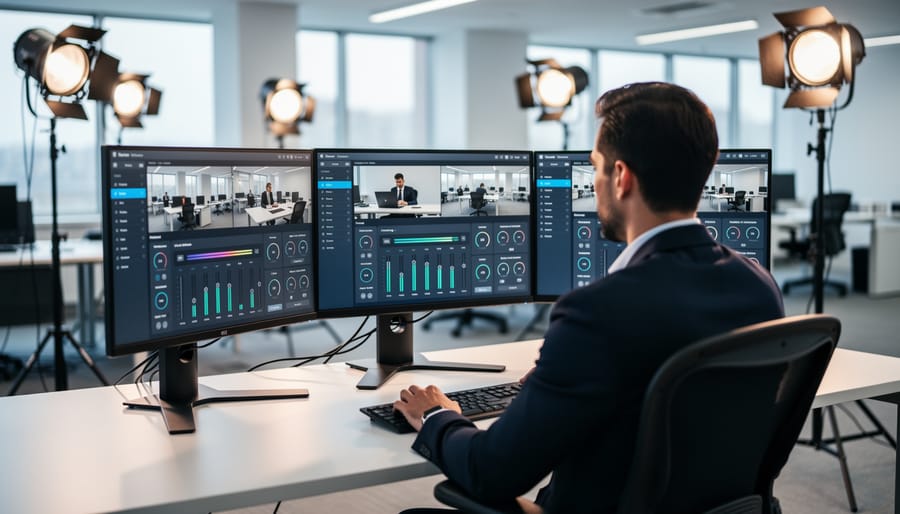
Automated Scene Switching and Preset Configurations
Managing multiple game types simultaneously demands rapid transitions between camera angles, lighting schemes, and audio configurations. Preset configurations eliminate manual adjustments by storing complete AV settings for each game variation—whether switching from roulette to blackjack or transitioning between different table limits and dealer rotations.
Modern control systems allow operators to program dozens of scenes that recall specific combinations instantly. A single button press can reconfigure camera positions, activate appropriate graphics overlays, adjust lighting temperatures to match game aesthetics, and route audio channels correctly. This capability proves especially valuable during peak hours when studios run concurrent games across multiple tables.
The practical advantage extends beyond speed. Preset scenes ensure consistency across broadcasts, maintaining brand standards regardless of which operator initiates the switch. New staff can confidently manage complex technical environments without extensive training, reducing operational errors that might otherwise disrupt player experience.
For casino operators, this automation translates directly to operational efficiency. Studios can accommodate more game variations without proportional increases in technical staff, while maintaining the professional production quality that differentiates premium live dealer experiences from competitors. The system essentially functions as an experienced technical director, executing complex sequences flawlessly every time.
Remote Monitoring and Troubleshooting
Managing multiple live dealer studios requires constant vigilance, but physically monitoring each space creates operational inefficiencies. Centralized remote monitoring systems address this challenge by consolidating all technical data into unified dashboards that technical teams can access from a single control room or even off-site locations.
These integrated platforms continuously track critical parameters across your studio infrastructure. Temperature sensors alert staff to climate control issues before equipment overheats. Audio level meters detect microphone problems instantly. Network bandwidth monitors identify connectivity degradation that could disrupt streams. Camera health indicators flag potential hardware failures days before they impact broadcasts.
The real advantage comes from predictive maintenance capabilities. Rather than waiting for dealers or players to report problems, your technical team receives automated alerts the moment any metric deviates from optimal ranges. A slight audio imbalance might go unnoticed during gameplay but triggers immediate notification in your monitoring system, allowing technicians to schedule repairs between shifts rather than during peak hours.
Remote troubleshooting functionality enables quick responses without studio visits. Technical staff can adjust lighting temperatures, reboot streaming encoders, switch camera feeds, or modify audio routing from their workstations. For casinos operating 24/7 across multiple time zones, this capability dramatically reduces downtime and eliminates the need for round-the-clock on-site personnel at every location.
Documentation features automatically log all incidents and resolutions, creating valuable data for identifying recurring issues and optimizing your infrastructure over time. This systematic approach transforms reactive firefighting into proactive system management.
Integration Challenges Specific to Casino Studios
24/7 Operational Requirements and Redundancy
Online casino studios cannot afford a single minute of downtime without potentially losing thousands in revenue and damaging player trust. This demanding reality requires comprehensive redundancy planning across every component of your AV infrastructure.
Effective backup systems start with dual power supplies and uninterruptible power sources (UPS systems that provide seamless transition during outages). Your streaming infrastructure should include redundant encoders, so if one fails, the backup automatically takes over without interrupting the live broadcast. Network redundancy is equally critical—multiple internet connections from different providers ensure connectivity remains stable even if one service experiences issues.
Failover protocols need automation rather than manual intervention. Modern systems detect component failures within milliseconds and switch to backup equipment before players notice any disruption. This includes redundant cameras, audio mixers, and lighting control systems that activate instantly when primary systems encounter problems.
Preventive maintenance scheduling during low-traffic hours helps identify potential issues before they cause outages. Regular system health monitoring, firmware updates, and component testing should follow documented procedures that minimize risk. Remote monitoring capabilities allow technical teams to address emerging problems proactively, often resolving issues before they impact operations. Building this level of operational resilience requires partnering with integrators who understand the unique demands of 24/7 casino broadcasting environments.
Scaling for Multiple Tables and Game Types
Your AV integration architecture should grow alongside your business ambitions. Starting with a single blackjack table doesn’t mean you’re locked into limited infrastructure—the right system design anticipates expansion from day one.
Modular control platforms form the foundation of scalable casino studio operations. These systems allow you to add new tables, cameras, and audio sources without rebuilding your entire setup. Think of it like adding rooms to a smart home—each new gaming table becomes another zone within your centralized control system, managed from the same interface your operators already know.
Successful multi-table operations require distribution architecture that handles increased bandwidth without bottlenecks. Network switches, video routers, and audio matrices should be specified with headroom—typically planning for 150% of your initial capacity ensures comfortable growth. This prevents the costly mistake of replacing core infrastructure when launching table number five or six.
Cross-studio expansion introduces additional complexity, particularly around centralized monitoring and backup systems. Cloud-based management platforms enable your technical team to oversee multiple locations from a single dashboard, quickly identifying issues across your entire operation. This centralized approach reduces staffing costs while maintaining consistent quality standards as you scale.
Synchronizing AV Systems with Gaming Software
Perfect synchronization between cameras, audio equipment, and gaming software requires sophisticated API integration. Modern casino studios utilize middleware that connects physical AV systems with gaming platforms through RESTful APIs or WebSocket protocols, ensuring millisecond-accurate coordination between dealer actions and player interfaces.
The integration process involves mapping camera feeds to specific game states, synchronizing audio channels with gameplay events, and aligning graphical overlays with physical card reveals or roulette spins. This timing coordination eliminates the frustrating delays that can undermine player trust and engagement.
Effective systems employ frame-accurate timecode synchronization, allowing the control infrastructure to trigger specific camera angles, lighting changes, and interface updates based on real-time game progression. For operators, this means implementing tailored solutions that account for network latency, processing delays, and the unique timing requirements of different game types. When properly configured, players experience seamless gameplay where digital elements appear naturally synchronized with live dealer actions, creating the immersive experience that distinguishes premium live casino platforms from their competitors.
The Business Case: How Quality AV Integration Drives Revenue
Reduced Technical Downtime Equals Higher Revenue
In live casino operations, every minute of downtime directly impacts revenue potential. When technical failures interrupt gameplay, studios lose active betting opportunities across potentially hundreds of concurrent players. A properly integrated AV system with redundant pathways and automated failover mechanisms can reduce unplanned outages by up to 95%, translating to significantly fewer lost gaming sessions.
Beyond immediate revenue protection, system reliability builds player confidence. Regular technical interruptions frustrate users and drive them to competitors with more stable platforms. Professional AV integration ensures consistent video quality, synchronized audio, and uninterrupted streaming that keeps players engaged and returning. The investment in reliable infrastructure pays for itself through maintained uptime, preserved player trust, and sustained revenue streams that unreliable systems simply cannot deliver.
Enhanced Production Quality Attracts Premium Players
Professional broadcast quality creates an immediate visual distinction that high-value players recognize and appreciate. When your studio delivers crystal-clear 4K video streams, balanced lighting that eliminates shadows, and audio clarity that captures every card shuffle, you signal operational excellence that justifies premium table limits.
High-stakes players expect an experience that mirrors exclusive land-based casinos. Integrated AV systems eliminate the technical distractions that erode confidence—no pixelation during crucial hands, no audio delays that disrupt game flow, and no lighting inconsistencies that make card reading difficult. These players are willing to pay for reliability and presentation quality.
The investment in sophisticated control systems pays dividends through increased table hold percentages. Premium players gravitate toward studios that demonstrate attention to detail, viewing production quality as a proxy for overall operational standards. When your technical infrastructure matches the stakes being wagered, you create the confidence necessary to attract and retain your most valuable customer segment. This differentiation becomes particularly important in competitive markets where multiple operators vie for the same high-roller demographic.
Choosing the Right Integration Partner for Your Casino Studio
Selecting the right AV integration partner can make the difference between a studio that operates flawlessly around the clock and one plagued by technical disruptions that damage your reputation. Your ideal partner should bring specific expertise that aligns with the demanding nature of casino operations.
Start by evaluating their experience with commercial control systems rather than residential installations. Casino studios require enterprise-grade solutions that can manage multiple simultaneous game tables, coordinate complex audio routing, and maintain consistent performance during peak hours. Ask potential partners for case studies demonstrating their work with 24/7 operational environments—healthcare facilities, broadcast studios, or security operations centers provide comparable experience.
Understanding your continuous operation requirements is non-negotiable. Unlike typical commercial spaces, your studio never closes. Your integration partner must design systems with redundancy built in, specify components rated for constant use, and provide maintenance schedules that don’t interrupt gaming sessions. They should proactively address potential points of failure before they become problems.
The ability to deliver tailored solutions that scale with your business separates exceptional partners from adequate ones. Generic installations rarely meet the unique demands of live dealer gaming. Look for providers who ask detailed questions about your specific games, player volumes, expansion plans, and regulatory requirements. They should propose modular architectures that allow you to add tables, upgrade camera systems, or integrate new game formats without rebuilding your entire infrastructure.
Request references from clients who’ve worked with them over multiple years. A provider who delivers ongoing support, stays current with emerging technologies, and adapts solutions as your needs evolve becomes a true business partner rather than just a vendor. Finally, ensure they understand both the technical requirements and the customer experience implications—smooth, reliable gameplay depends on systems that work invisibly behind the scenes while delivering engaging, high-quality streams to players worldwide.
In the competitive landscape of online casino operations, professional AV integration isn’t simply a nice-to-have feature—it’s the foundation of your entire live gaming platform. The studios that succeed are those that recognize sophisticated audiovisual systems as business-critical infrastructure, not just technical add-ons. Every component, from cameras capturing dealer movements to the network architecture delivering seamless streams to thousands of simultaneous players, directly impacts your revenue potential and brand reputation.
The complexity of integrating multiple video feeds, audio channels, lighting systems, and control interfaces might seem overwhelming, but that’s precisely where the right technology partner makes all the difference. Professional integration transforms a maze of cables, protocols, and equipment into a streamlined operation that your team can manage confidently. When systems work together seamlessly through centralized control, your staff focuses on delivering exceptional gaming experiences rather than troubleshooting technical problems.
Ultimately, investing in proper AV integration isn’t an expense—it’s a strategic advantage that separates market leaders from those struggling with frequent downtime, poor stream quality, and operational inefficiencies. The question isn’t whether you can afford professional integration, but whether you can afford to operate without it.